
Residential
Residential is one of Slättö's two conviction segments, supported by limited construction and continued rental growth in capital cities and larger regional cities.
Denmark leads, Sweden is strong and Finland is normalising
Investment market
Denmark continues to lead, remaining the Nordics' most liquid residential market with the tightest pricing as institutional demand concentrates in Greater Copenhagen. Sweden is close behind and has been very strong, with H1 2026 volumes at roughly twice the ten-year average and a wider buyer base as local core capital returns alongside international investors. Finland is normalising, with volumes back in line with its ten-year average as forced sellers grow scarce. Prime yields have compressed from peak across the capitals.

Rental market
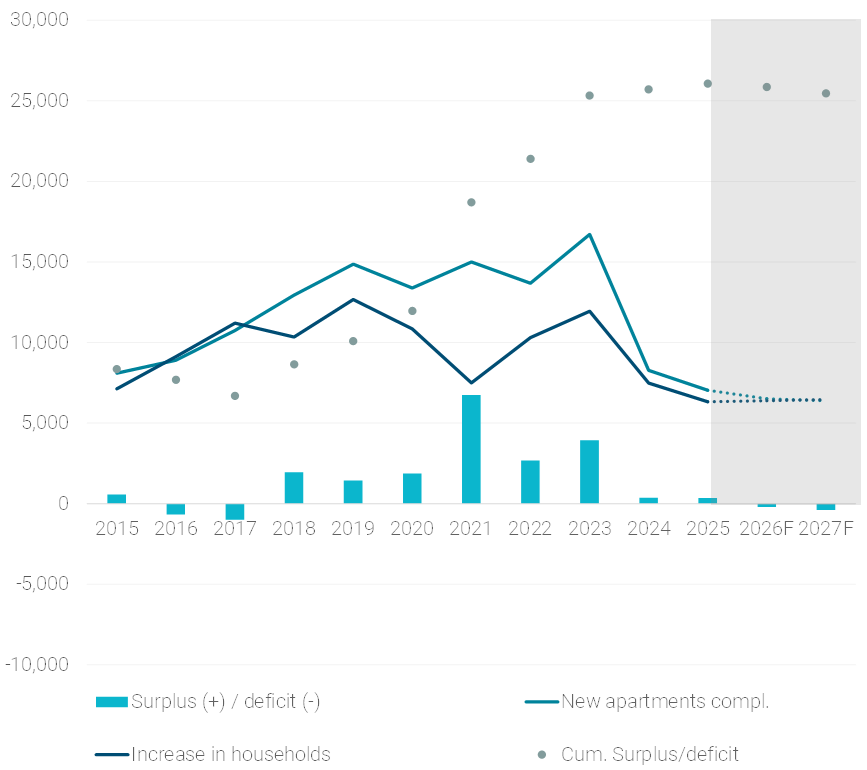
Rental growth is forecast to be strongest in Denmark, followed closely by Sweden, with Finland trailing in the near term. Greater Copenhagen has outpaced the national average since 2022, reaching 4.6% year-on-year in 2026, and a shrinking construction pipeline should keep supply constrained; national private-rental vacancy hit a historic low of 1.9% in Q4 2025. In Sweden, the regulated system is gradually recouping the 2022-23 inflation gap, with rents up 3.5% in 2026 and real rental growth expected to continue; demand is more selective, however, with weaker absorption of higher-priced new production in peripheral locations. In Finland, rental growth remains subdued, with a rebound expected from 2028 onwards following a period of lower construction rate.
New Swedish legislation effective from July 2026 formally recognises rent-to-buy, opening a route into the underpenetrated single-family rental market, where only 5% of Sweden's single-family housing stock is currently rented.
Real rental growth in Sweden is expected to continue
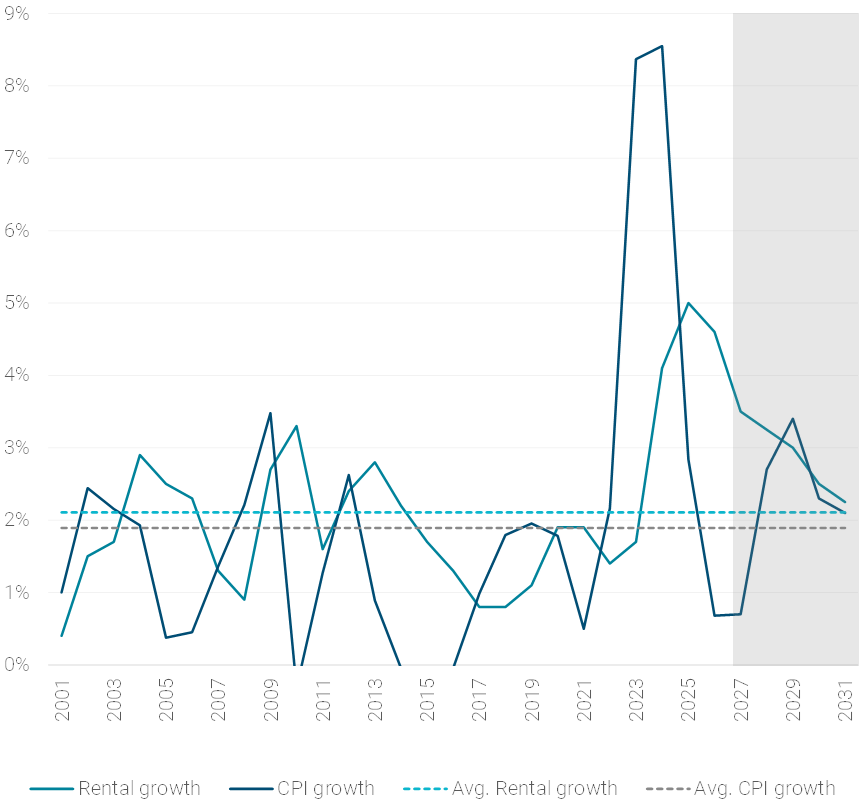
Data: SCB and Slättö
Greater Copenhagen is forecast to lead Nordic rental growth
Slow rental growth in Finland in the short-term, expected to increase
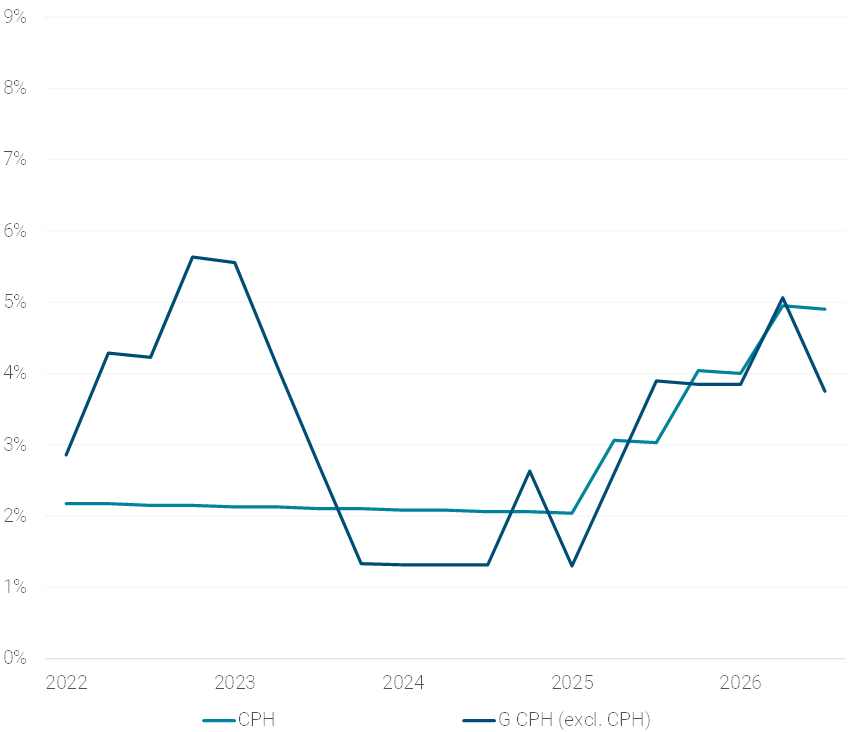
Year-on-year rental growth, private housing in primary locations. Data: Colliers
Housing supply and demand in HMA in Finland. Data: Statistics Finland, Forecast by Slättö House View
Owner-occupied market
Sweden and Denmark are both set for growth, with Finland trailing. Swedish prices have climbed to new highs as transaction volumes pick up again, with Stockholm leading, supported by rising real incomes, stabilised interest rates and a loan-to-value cap relaxed to 90% - though elevated listing volumes still weigh on selected markets. In Denmark, prices have surged around 20% year-on-year in Copenhagen and Aarhus, making break-up opportunities increasingly attractive, but supply in Copenhagen has doubled over the last six months and Denmark's central bank (Danmarks Nationalbank) has warned the pace is unsustainable, so caution is warranted. Finland remains subdued, yet the persistent gap between consumer and institutional pricing continues to favour break-up strategies in selected infill locations.
Denmark leads the recovery and the Nordic rental growth outlook, Sweden is strong with a broader buyer base, and Finland is normalising from a low base.
Fundamentals support rent growth, but location matters and new rent-to-buy legislation opens single-family rentals as a strategy in Sweden.
Owner-occupied apartments are rising in Sweden and Denmark, supporting break-up strategies, though Danish price momentum warrants caution and Finland trails.